The First Steps-Characterization of the Material
The most important thing in any process or product development is understanding the materials properties. How does that material respond when any applied thermal or mechanical force are applied to it? How much energy is needed and for what length of time? Are there reactions or phase changes involved, and how do those processes affect the end material?
To begin any engagement, MWC will seek to obtain as much materials property information as it can. That information may from directly the client or by performing characterization experiments with the clients permission and under non-disclosure agreement to gain understanding,
Such well-known characterization techniques as thermogravimetric Analysis (TGA), Differential Scanning Calorimetry (DSC, Flourier Transform Infrared (FTIR), Scanning Electron Microscopy (SEM), Gas Chromatography (GC), among others are all at MWC’s disposal to use to analyze the materials the client has interest in investigating.
One method that isn’t as well known or as widely used as the aforementioned techniques but can be critical for understanding interactions between electromagnetic energy (microwave and radio frequency) and the material to be processed, is measuring dielectric properties.
This method looks at a materials response when exposed to a range of frequencies in the microwave or radio frequency spectrum. The measurements determine how that material interacts, and when combined with thermal heating, can determine the temperatures where the material best interact with the applied energy.
In that regard the technique is similar to TGA or DSC, but instead of thermal property measurement the client gets an understanding of the processing window for electromagnetic techniques which will show technical feasibility and, when combine techniques, economic feasibility.
The diagrams below show dielectric measurements of a cement material exposed to microwave energy up to 1300C:
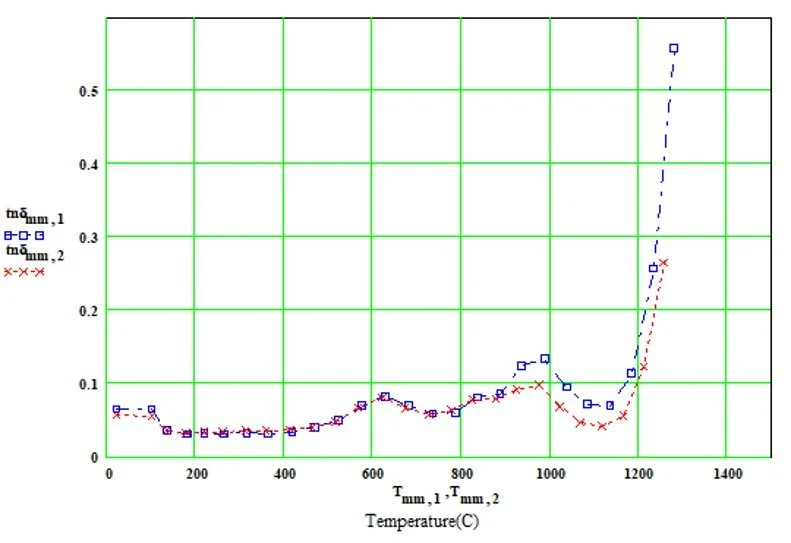
Microwave absorption of the material as a function of temperature
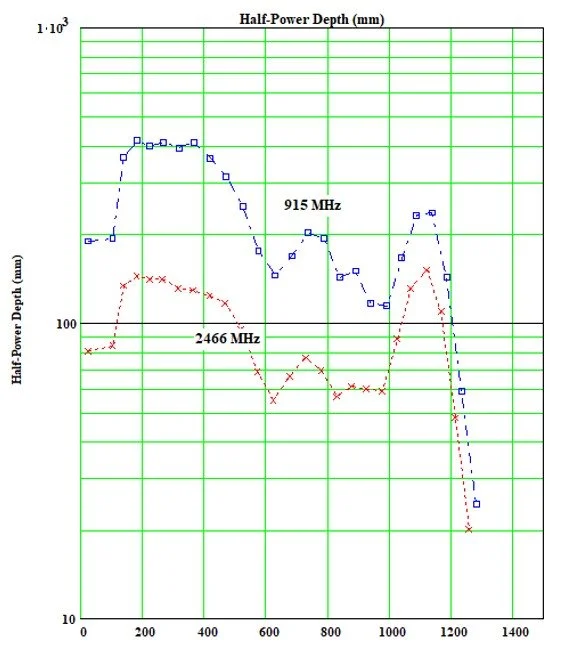
Microwave penetration into the material as a function of temperature
Examples of heating and processing systems designed by M-Wave Consulting
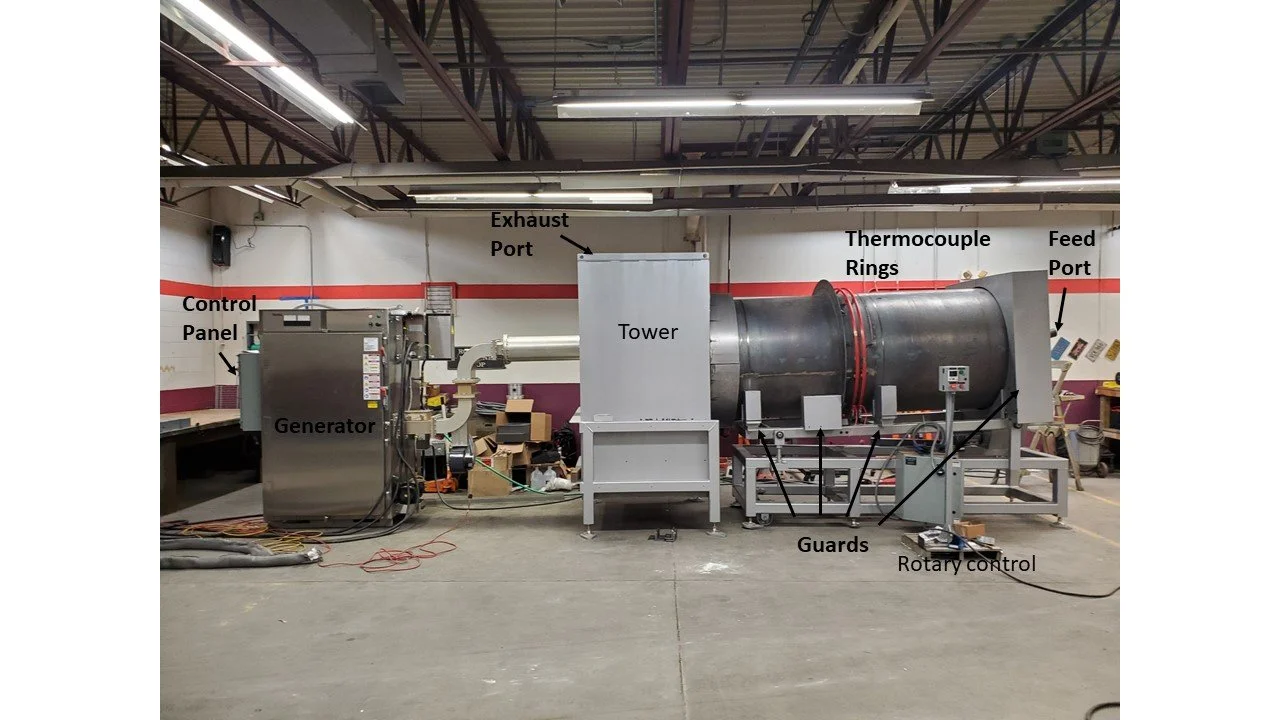
Microwave rotary kiln in early stages of build
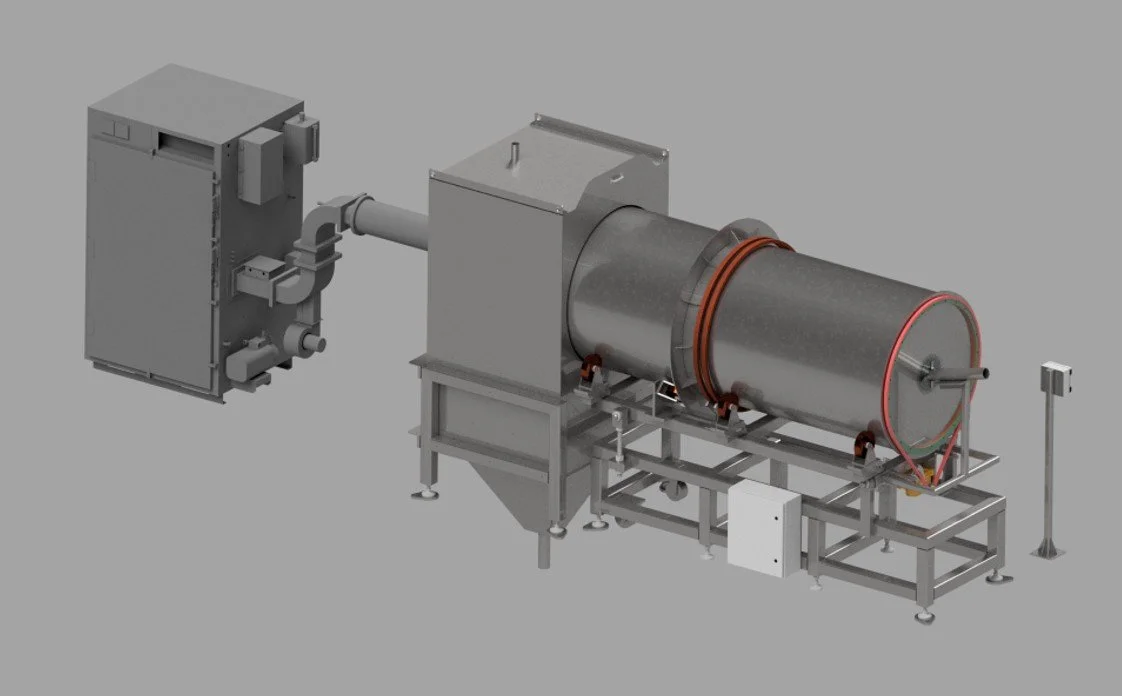
CAD Render of system to process a material on a upper level and feed to a cooler on a lower level
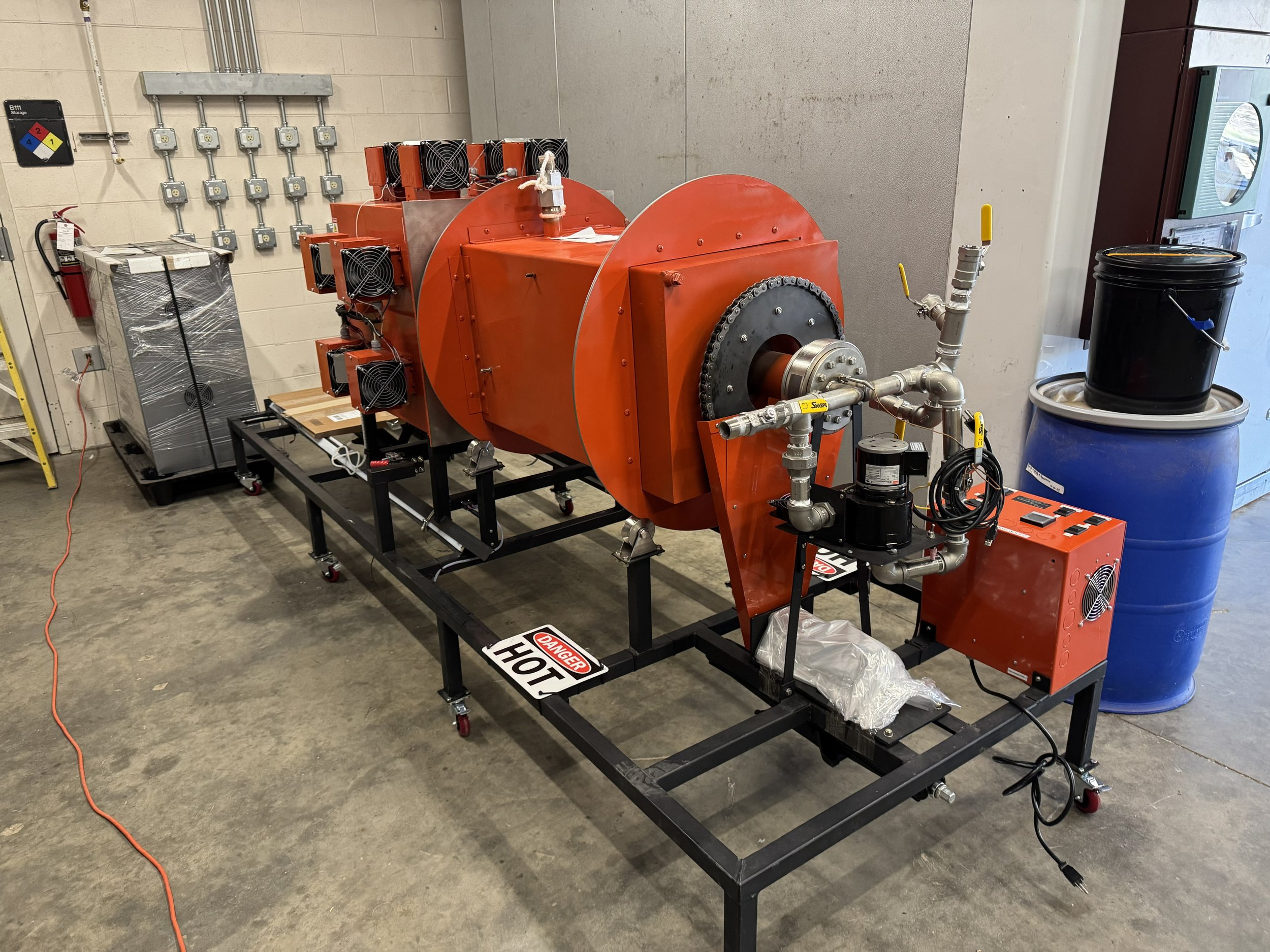
Gas handling and atmosphere controlled rotary microwave systems
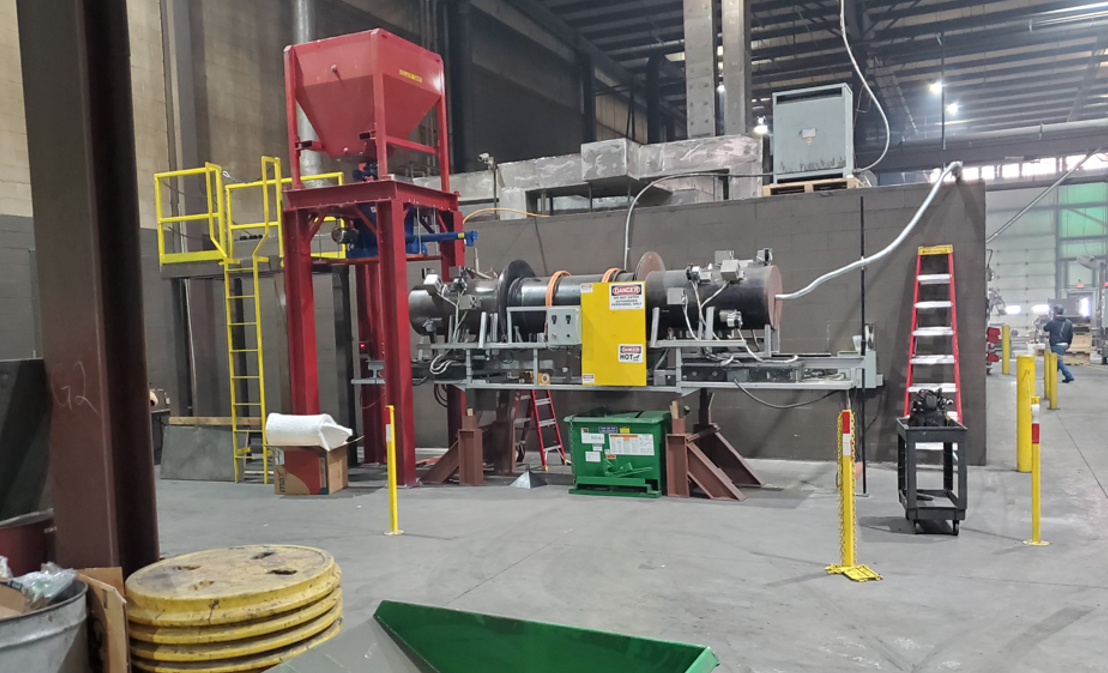
Microwave processor along with ancillary equipment for sand processing
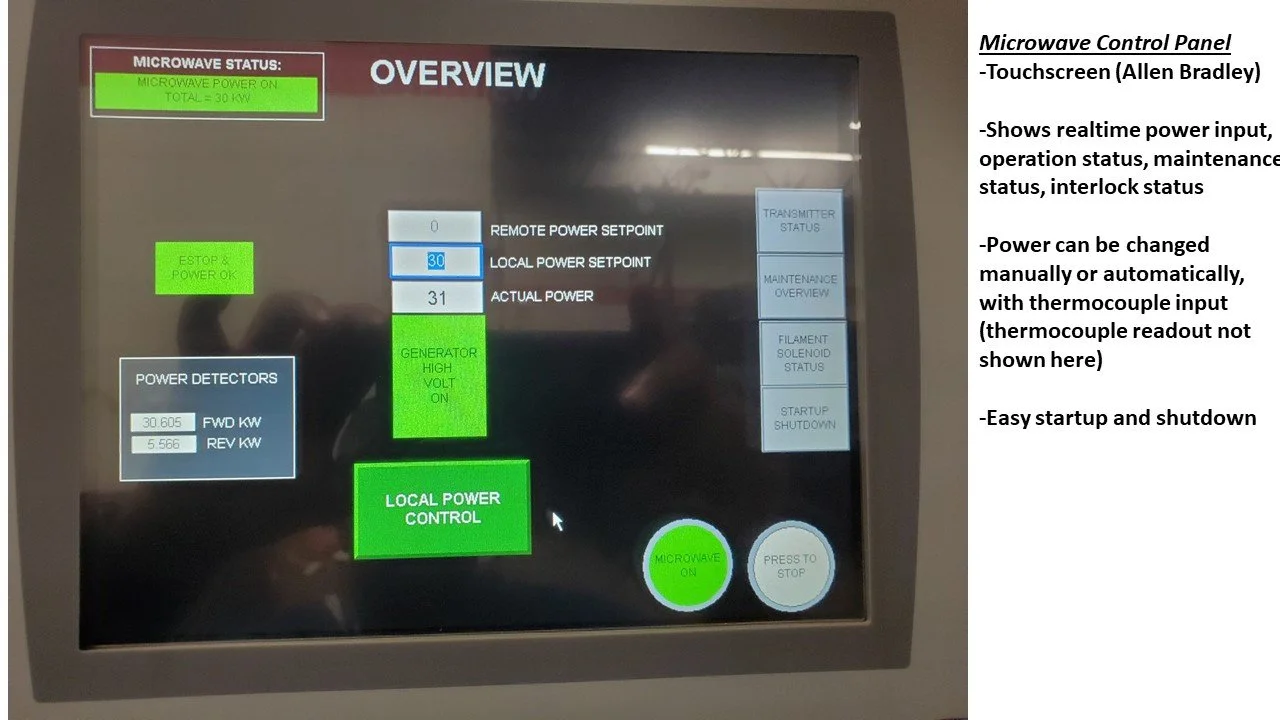
Touchscreen Control Panel
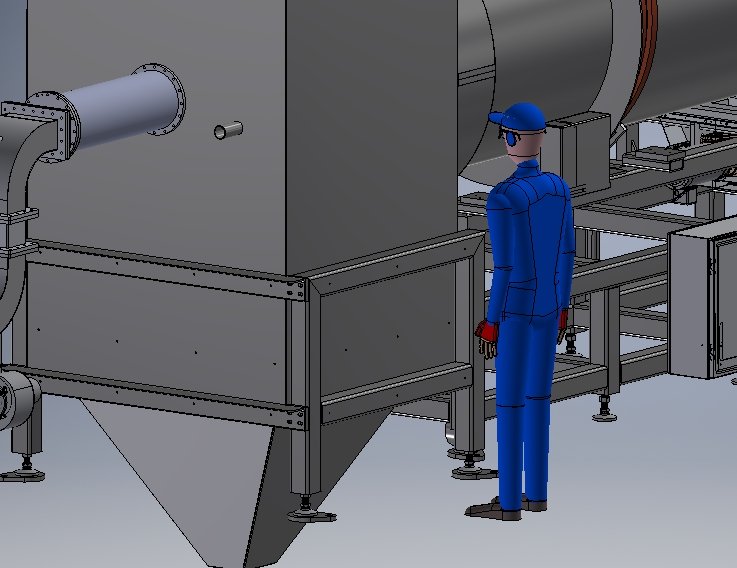
Render of operator next to processing system (scaled)
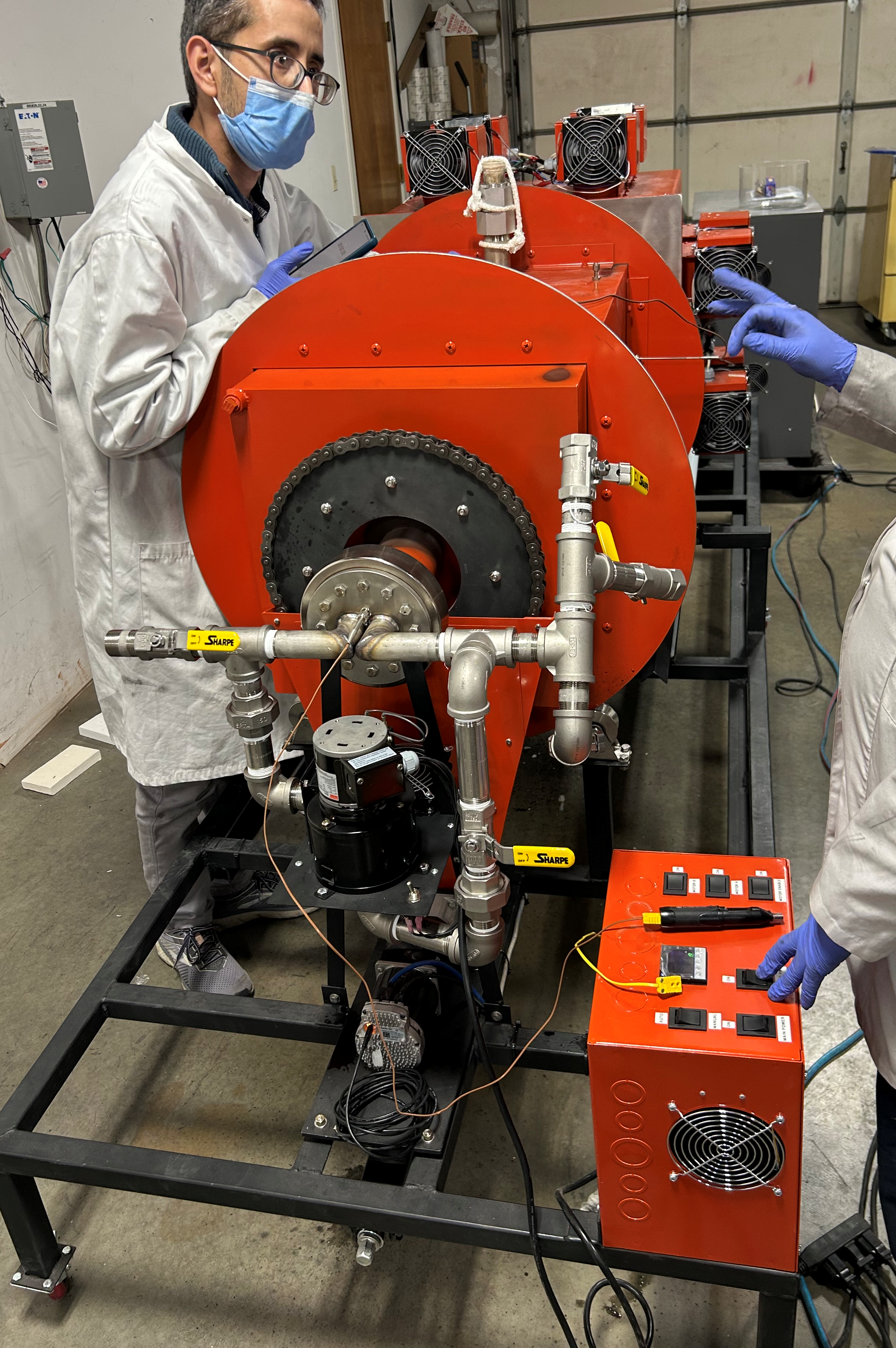
Operators working with the equipment